Ghana, a West Africa country is neighboured by Cote D’Ivoire to the West, Burkina Faso to the North, Togo to the East and the Gulf of Guinea to the south.
The sea, a resource to the country, has unique features and has evolved over the years.
When asked to name some of Ghana’s natural resources, you are most likely to mention gold, bauxite, and others. While these answers are correct, the list is often non-exhaustive, and we are most likely to forget one critical resource: the sea.
One of Ghana’s biggest blessings is its ocean. Without any doubt, it has played an integral role in our culture, history, and, most importantly, our food systems.
From the wide varieties of fish and seafood we enjoy, the ocean has long sustained livelihoods and nourished generations.
Historically, the oceans served as the pathway to what later became the Gold Coast and subsequently Ghana.
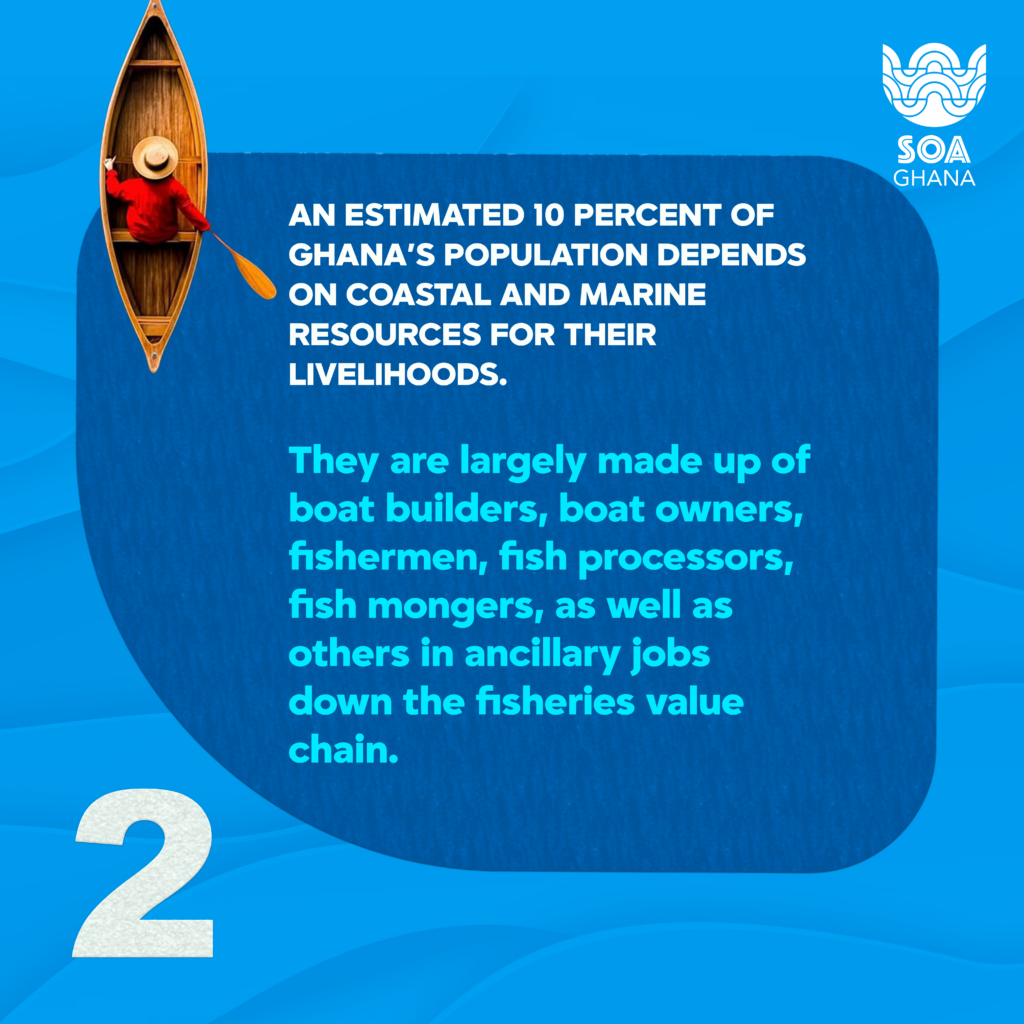
For centuries, coastal communities have depended on the sea for survival, trade, and identity, and in many ways, they have fed the nation. The ocean, in itself, is a powerful industry that creates a vibrant local economy, supporting fishermen, traders, processors, transporters, and countless auxiliary services.
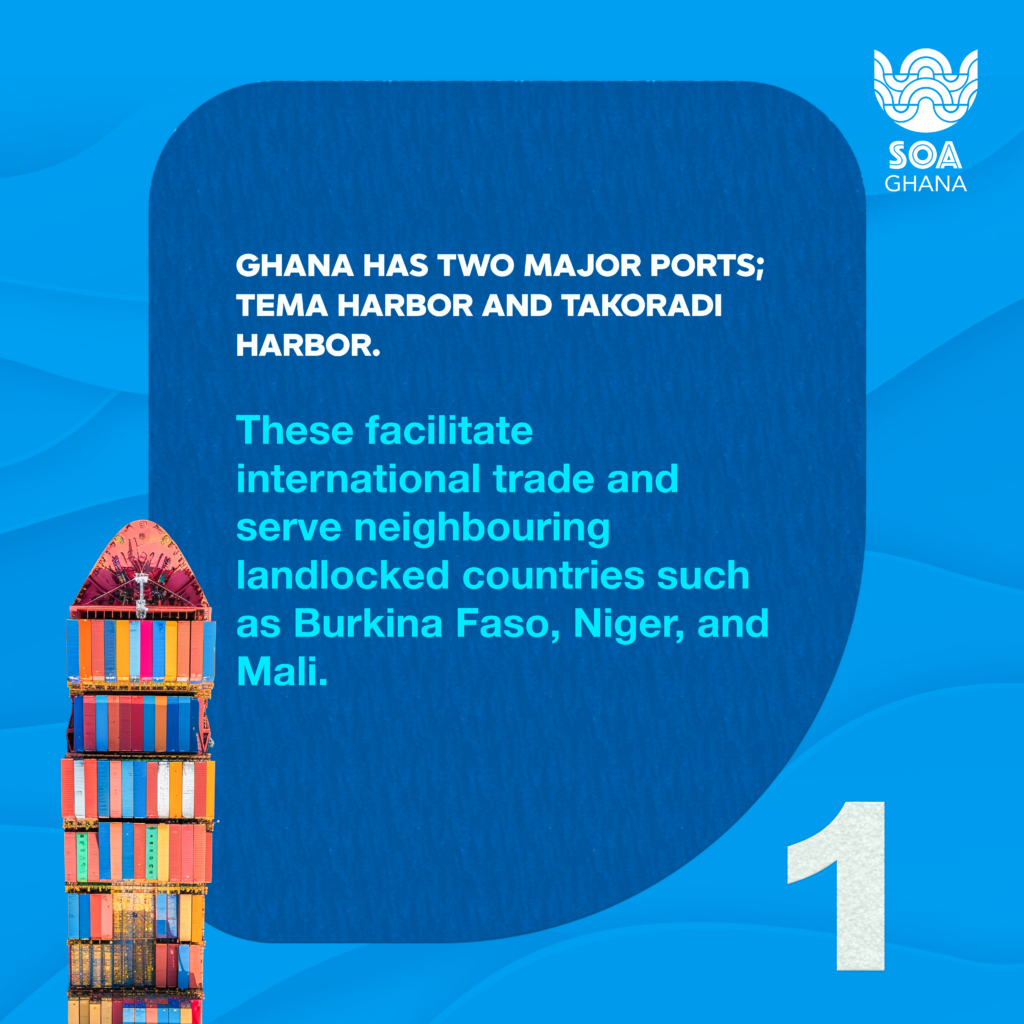
At its two major ports in the ‘T-Cities’; Takoradi in the Western Region and Tema in the Greater Accra Region, Ghana makes billions of cedis year in, year out.
These revenues go a long way in supporting the national economy and continue to position the country as a major freighting destination, especially for landlocked neighbours such as Burkina Faso, Niger, and Mali. Through maritime trade, Ghana remains a critical gateway to the sub-region.
The sea is indeed a treasure chest of many goodies that continues to support our wellbeing. It is a resource we need to hold close to our chest and protect diligently for future generations.
Ghana’s ocean also sits in a very important part of the wider global ocean community, contributing to regional trade, biodiversity, and climate systems.
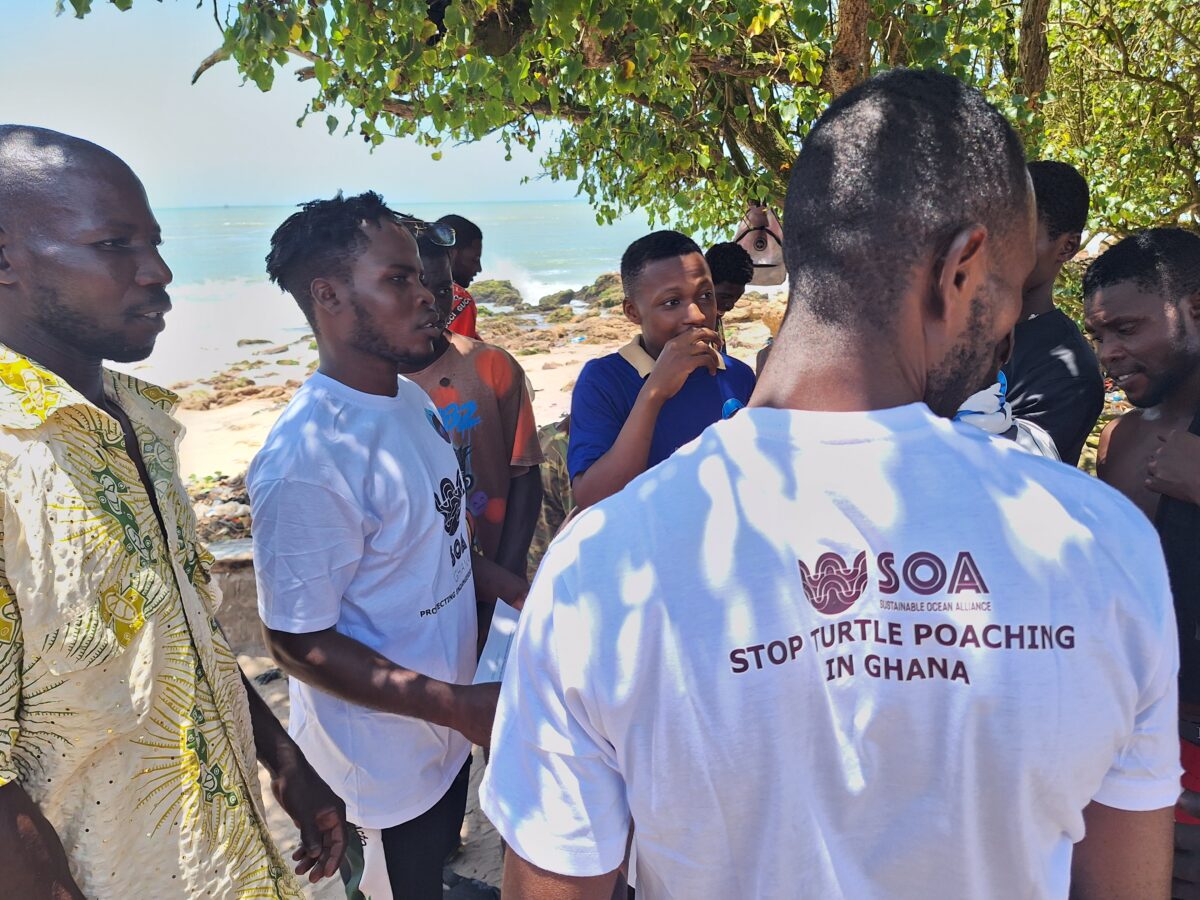
Sea turtles, essential guardians of marine ecosystems, are critically endangered due to human activities. In Ghana, despite legal frameworks such as the Wildlife Resources Management Act 115 of 2023 and international agreements, illegal poaching and trade persist. This report reviews existing policies and provides a detailed roadmap for policymakers to enhance sea turtle conservation, drawing from stakeholder engagement conducted by SOA Ghana in 2024 and journalistic insights from “The Vanishing Guardians of Ghana’s Oceans” by Gideon Sarpong.
1. Review of Existing Policies and Regulations
Key Legislation
Wildlife Resources Management Act 115, 2023
Classifies sea turtles as protected species under Schedule 1.
Prohibits capture, possession, or sale of sea turtles and their derivatives.
Imposes penalties for violations.
International Commitments
Convention on International Trade in Endangered Species (CITES): Regulates trade of endangered species.
Convention on the Conservation of Migratory Species of Wild Animals (CMS): Protects migratory species like sea turtles.
Local Enforcement Challenges
Insufficient resources for Wildlife Division field offices.
Lack of community involvement and awareness.
Economic hardships driving illegal activities.
Current Gaps
1. Weak Enforcement of Laws
While the Wildlife Resources Management Act 115 and international agreements provide a strong legal foundation for protecting sea turtles, enforcement is often ineffective. Coastal communities such as Nyanyano continue to witness open poaching and trade of sea turtles. Factors contributing to weak enforcement include:
Insufficient Funding: The Wildlife Division lacks the financial resources necessary to maintain surveillance and conduct operations in all poaching hotspots.
Limited Personnel and Training: Field offices are often understaffed and ill-equipped to monitor extensive coastal regions effectively. Many officers lack training in modern conservation practices and enforcement tactics.
Inconsistent Prosecution: Cases of poaching rarely result in convictions due to procedural delays, lack of evidence, or community resistance.
2. Insufficient Community Engagement and Awareness
Coastal communities often have limited understanding of the ecological importance of sea turtles. Many individuals, driven by economic necessity, view turtles solely as a source of income. Contributing factors include:
Lack of Targeted Education Programs: Conservation education efforts are sporadic and fail to address specific misconceptions or cultural beliefs that perpetuate poaching.
Minimal Local Involvement: Community members are rarely engaged in conservation initiatives, leading to a disconnect between policy objectives and local practices.
Cultural Barriers: In some areas, traditional beliefs and practices either condone or ignore the exploitation of sea turtles.
3. Economic Pressures on Coastal Communities
Economic hardship is a major driver of illegal poaching. Fishers and traders often rely on sea turtles as an alternative income source, particularly during closed fishing seasons. Specific challenges include:
Seasonal Income Instability: Fishing, the primary livelihood for many coastal residents, is highly seasonal and unreliable.
Lack of Alternative Livelihoods: Few viable income alternatives are available in coastal communities, forcing individuals to engage in illegal activities.
High Demand for Turtle Products: Local and regional markets for turtle meat, shells, and other derivatives provide financial incentives for poachers and traders.
4. Resource Constraints for Conservation Agencies
Agencies tasked with protecting sea turtles face numerous logistical and financial challenges. These include:
Inadequate Equipment: Surveillance and monitoring efforts are hampered by outdated or insufficient equipment such as patrol boats, drones, and communication tools.
Limited Data Collection: Poorly maintained databases and lack of research funding hinder the ability to track sea turtle populations and nesting patterns.
Fragmented Efforts: Conservation initiatives are often uncoordinated, with limited collaboration between government agencies, NGOs, and local communities.
2. Policy Roadmap for Sea Turtle Conservation
Goal
To ensure the long-term survival of sea turtles in Ghana by addressing enforcement, education, community engagement, and sustainable livelihood support.
Recommendations
2.1 Strengthen Enforcement
Increase Funding and Resources
Allocate additional government funding to the Wildlife Division.
Equip field offices with tools for surveillance and monitoring.
Improve Interagency Coordination
Collaborate with local law enforcement and coastal community leaders.
Establish task forces targeting poaching hotspots like Nyanyano.
Enhance Prosecution
Fast-track cases involving sea turtle poaching and illegal trade.
Publicize convictions to deter potential offenders.
2.2 Community Engagement
Educate Coastal Communities
Launch awareness campaigns highlighting the ecological role of sea turtles.
Collaborate with schools, religious institutions, and traditional leaders.
Promote Community-Led Conservation
Support local groups like the Environmental Justice Foundation.
Train and empower community members as “turtle guardians.”
2.3 Economic Alternatives
Provide Sustainable Livelihoods
Support fishers with alternative income sources (e.g., aquaculture, ecotourism).
Offer microloans for small businesses in coastal areas.
Develop Ecotourism Initiatives
Establish protected nesting areas as tourist attractions.
Train locals as tour guides and conservation educators.
2.4 Enhance Data Collection and Monitoring
Expand Research
Partner with academic institutions to monitor sea turtle populations.
Use GPS tagging to study migration patterns and identify critical habitats.
Set Up Reporting Mechanisms
Introduce anonymous hotlines for reporting poaching activities.
Reward informants to encourage community involvement.
3. Stakeholder Engagement Insights
Key Challenges Identified
Economic Pressures: Fishers and traders resort to poaching due to financial struggles.
Lack of Awareness: Communities unaware of the critical role of sea turtles.
Weak Enforcement: Minimal action against known poachers and traders.
Policy Interventions
Targeted Education: Conduct workshops in high-risk areas like Nyanyano.
Collaborative Enforcement: Partner with community leaders and conservation groups.
Economic Support Programs: Align conservation efforts with poverty alleviation strategies.
4. Conclusion and Call to Action
Sea turtles are indispensable to Ghana’s marine ecosystem, yet their survival is at risk due to human activities. By addressing enforcement gaps, empowering communities, and providing sustainable alternatives, Ghana can lead the way in marine conservation. Policymakers, conservationists, and local communities must collaborate urgently to turn the tide and protect these vanishing guardians of our oceans.
Appendices
Appendix A: Excerpts from Wildlife Resources Management Act 115, 2023
Full protection for sea turtles under Schedule 1.
Penalties for illegal capture or trade.
Appendix B: Stakeholder Engagement Summary
Challenges faced by fishers and traders.
Conservation success stories from other regions.
Appendix C: Proposed Budget for Conservation Efforts
Community education programs: $200,000
Field office resource enhancement: $500,000
Livelihood support initiatives: $300,000
Research and monitoring: $150,000
This budget should be subject to review every six months.
By adopting this roadmap, Ghana can secure a future where sea turtles thrive, ensuring the health of its marine ecosystems for generations to come.
This policy report was produced by SOA Ghana led by Gideon Sarpong, Founder SOA Ghana Hub
In Accra’s bustling Makola Market, the daily chatter reflects the struggles and hopes of Ghana’s coastal communities. Fishermen like Kojo Mensah, who has been navigating the Atlantic waves for decades, voice growing concerns over the future of their livelihoods. “If the fish disappear because of some mining we don’t even understand, what will my children eat? What will they do?” he asks, his weathered hands gesturing towards the ocean.
Kojo’s fears are echoed across Africa as the debate around deep-sea mining (DSM) intensifies. Proponents tout its potential to boost economies by extracting valuable minerals from the ocean floor. Yet, for many African nations, the financial promises of DSM appear eerily similar to the unfulfilled dreams of terrestrial mining, which has left a trail of environmental destruction and economic inequities.
Learning from the Past
Africa’s history with terrestrial mining is a cautionary tale. In the Democratic Republic of Congo (DRC) and Zambia—Africa’s largest copper producers—mismanagement, corruption, and pollution have cost nations billions. The DRC alone has lost an estimated $3.7 billion due to malpractice in the mining sector. Far from being a pathway to prosperity, mining has often enriched foreign corporations while devastating local ecosystems and communities.
DSM threatens to replicate these patterns on a massive scale. The Democratic Republic of Congo, Zambia, Namibia, and Zimbabwe are among the African nations most likely to feel the economic ripple effects of DSM. A 2020 study commissioned by the International Seabed Authority (ISA) revealed that DSM could disrupt the global supply chain, undermining the export-dependent economies of these nations.
“Countries like Zambia and the DRC could lose up to 79% of their export income if DSM causes a global glut in minerals like copper and cobalt,” warns Professor Mensah Anani, an economist specializing in resource governance. These losses would not only erode GDP but also threaten jobs and public services that are already stretched thin.
The Cost of False Promises
Despite its branding as a global solution to mineral shortages, DSM presents significant financial risks for African nations. The ISA, responsible for governing DSM activities, initially promised equitable benefits for developing states. Yet, these promises are undermined by glaring gaps in policy and practice.
For instance, contractors often negotiate agreements that exempt them from corporate income tax, further slashing the potential revenue for sponsoring states. Moreover, the high costs of DSM technology, environmental impact assessments, and regulatory oversight mean that any returns would likely be consumed by operational expenses.
Even the ISA’s own operational arm, The Enterprise, faces substantial limitations. Established to ensure fair participation by developing states, its dependence on joint ventures with private corporations significantly curtails its autonomy. “The profits, if any, will trickle down, not flow,” says Dr. Emmanuel Ofori, a marine governance expert.
Ecological and Economic Domino Effects
Beyond the financial risks, DSM poses a direct threat to Africa’s marine ecosystems, which are vital for food security and economic stability. Coastal states like Ghana, where tuna fishing accounts for a significant portion of export revenue, could see catastrophic impacts. Sediment plumes and noise pollution from mining operations are expected to disrupt fish habitats, potentially contaminating food chains and reducing fish stocks.
In Seychelles, where tuna exports make up nearly 90% of merchandise trade, the stakes are even higher. “Our oceans are our lifeline,” explains Seychelles-based environmentalist Rose Beauchamp. “If DSM undermines our fisheries, it’s not just an economic issue—it’s an existential one.”
Lessons from Climate Action
As Africa grapples with the realities of climate change, DSM represents a step in the wrong direction. The continent’s coastlines and marine ecosystems, already under threat from rising sea levels and illegal fishing, cannot afford the additional strain. Initiatives like the Moroni Declaration and the Nairobi Declaration emphasize the importance of protecting these ecosystems for climate resilience and economic security.
DSM, however, threatens to undo these efforts. The disturbance of deep-sea ecosystems, crucial for carbon sequestration, could exacerbate climate change, making Africa even more vulnerable to its effects.
The Way Forward
Rather than plunging into the uncertain depths of DSM, African nations should champion sustainable marine practices that align with global frameworks like the United Nations Sustainable Development Goals and the Paris Agreement. Investing in blue economy initiatives, such as marine biotechnology and sustainable fisheries, offers a path to prosperity without sacrificing environmental integrity.
“The ocean is our heritage and our future,” says Kojo Mensah, his gaze fixed on the horizon. For him and millions of Africans who depend on the sea, the risks of DSM are too great, the rewards too uncertain.
As the global community debates the merits of deep-sea mining, Africa must lead with caution, prioritizing the well-being of its people and ecosystems over short-term profits. The lessons of the past are clear: the true cost of exploitation is borne by those who can least afford it.
Report by Akwesi Appiah, This report was supported by SOA Ghana Hub
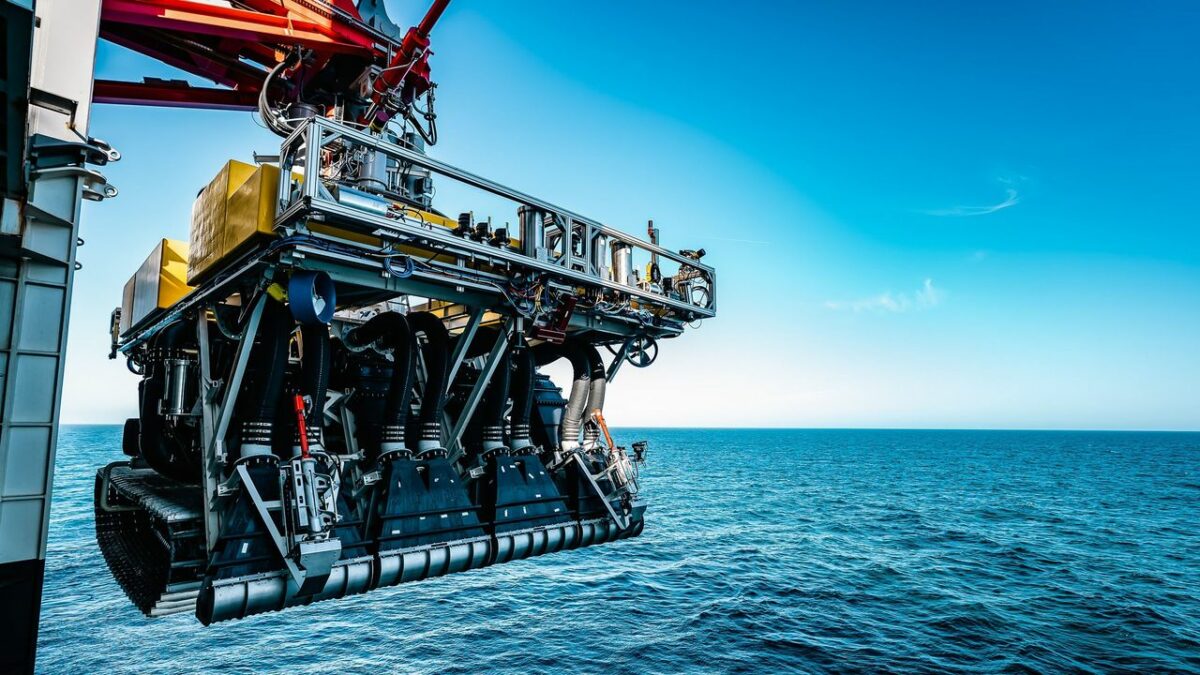
Nautilus Minerals equipment for deep seabed mining
Deep sea mining, also known as seabed mining, is the process of extracting valuable minerals and metals from the ocean floor. This practice has gained attention as a potential solution to meet the growing demand for resources such as rare earth elements, copper, nickel and cobalt. However, deep-sea mining poses significant threats to the ocean and its ecosystems, and it is essential that African governments represented by the African group at the International Seabed Authority (ISA) reject this practice and instead pursue sustainable alternatives.
One major concern with deep sea mining is the potential for damage to the ocean’s delicate ecosystems. These ecosystems, which are located in the abyssal plain, are home to a diverse array of unique and fragile species. The mining process, which involves the use of heavy machinery and explosives, can disrupt and destroy these habitats, leading to a decline in biodiversity. Research has shown that deep-sea mining can cause significant physical damage to the seabed, and can also lead to long-term changes in the composition of benthic communities, potentially leading to the extinction of species.
Another concern is the potential for pollution. The mining process can release large amounts of sediment and other pollutants into the water, which can have a detrimental effect on marine life and the overall health of the ocean. Additionally, the mining process can also release toxic substances, such as heavy metals, which can accumulate in the food chain and harm marine life. Studies have also shown that mining activities can release pollutants into the surrounding waters that can persist for years, and can affect the entire oceanic food web.
Deep sea mining also poses a significant risk to indigenous communities and local economies that depend on the ocean for their livelihoods. These communities, which are often located in coastal areas, rely on fishing, tourism, and other ocean-based activities for their survival. The disruption and destruction of the ocean’s ecosystems can have a devastating impact on these communities, leading to economic and social upheaval.
Given these concerns, it is crucial that African governments reject deep-sea mining and instead pursue sustainable alternatives. One such alternative is the use of recycled materials, which can reduce the demand for new resources and decrease the need for mining.
Another alternative is the development of clean energy technologies, which can reduce the demand for minerals and metals used in traditional fossil fuel-based energy production.
In conclusion, deep-sea mining poses significant threats to the ocean and its ecosystems, as well as to indigenous communities and local economies. African governments must reject this practice and instead pursue sustainable alternatives that prioritize the protection of the ocean and the well-being of communities.
A ban on deep sea mining is important to protect the ocean for the future generation.
ACCRA, Ghana — At an open shed along the coast of Bortianor in Accra, one can hear the chatter of market women who hang around the landing beach most mornings in hope of buying fish to trade as fishers pull their nets miles away to the shore.
“Sometimes, it takes as long as four hours to bring our nets ashore,” artisanal fisherman George Kowukumeh said. “And over the years, we have witnessed a drastic reduction in our catch.”
Artisanal fisherman George Kowukumeh at Bortianor landing beach, credit: AL-Fattah
There are currently about 150 fishing canoes operating at the Bortianor landing beach according to industry experts.
In Ghana, the artisanal fishing sector directlyemploy over 200,000 fishers, delivering 80 percent of total fish supply locally and provides livelihood to over 2 million people including thousands of market women in the value chain.
When it comes to fish, Ghanaian women have traditionally been confined to processing and retailing. The role of women is significant because they add value to fresh fish through processing, while distributing and preserving fish to ensure its availability long after the peak season and allowing it to reach consumers far from the landing beach.
However, the near collapse of the pelagic fish stock, which is the main target for artisanal fishers has left fishers and women in the value chain vulnerable to the impacts of climate change.
A two-month investigation by Gideon Sarpong based on interviews with dozens of fishery experts, researchers, fishers and women in the value chain has shown declining income levels for thousands of fishing households partly blamed on climate change and the rise in ocean temperature. A non-existent government intervention program to support fishing communities, particularly women who are very vulnerable to the negative effects of climate change has left them to their fate.
Climate change impact on fishers and fishmongers
It is over three hours since the fishers began pulling their nets at the Bortianor landing beach. There is an obvious anxiety among the market women and fishmongers gathered at the shore who buy their fish directly from the fishers.
Agnes Lamptey, a fishmonger for over 30 years explains the reason for the anxiety: “when there is no catch, we do not get any fish to process for selling. We can’t even provide for our children. My children are in high school and are forced to stay at home when there is a meagre catch.”
Moments after the conversation with Agnes, the fishers manage to bring their catch to the shore. “The catch today is disappointing and full of garbage,” local fisher, George Kowukumeh said. “Several hours of very hard work has produced less than 500 cedis ($62) worth of fish for the 9-member crew, what do we do with this?”
Fishers at Bortianor landing beach in Accra pull their nets to shore, credit: Al-FattahCatch by fishers at Bortiano landing beach, contains plastic waste, credit: AL-Fattah
Looking dejected and disappointed, some of the market women decide to wait a little longer for other fishing canoes that are yet to return to the shore. For the fishers, the disappointment is gradually becoming a routine as they quickly prepare to mend their nets.
In 2019, the Sustainable Fisheries Management research revealed that despite increasing fishing effort by the artisanal fishing fleet in Ghana’s waters, small pelagic fish catch has fallen by over 85 percent, from the peak in reported landings of 138,955 metric tonnes recorded in 1996. The researchers blamed climate change and other man-made activities such as illegal fishing as a major cause for the decline in pelagic fish stock in the country’s waters.
Dr. Opoku Pabi, lecturer and senior research fellow at the Institute for Environmental and Sanitation Studies, University of Ghana explained that, “fish catch is strongly related to surface water and atmospheric temperatures; generally, the lower the temperatures, the higher the fish catch.”
“This does vary somewhat across species, however: the catch for Pelagic (round sardinella) peaks when sea water temperature is at its lowest” he added.
Data from a research paper he co-authored showed that Ghana has experienced a, “steady rise in atmospheric and sea water temperatures since the 1960s, with the latter increasing by an average of 0.011degree Celsius yearly.”
The paper also noted that the: “end of the rainy season” which traditionally signals the start of the main fishing season has become very “unpredictable due to variability in rainfall distribution patterns, exacerbating poverty and indebtedness among artisanal fishers and women in the value chain.”
Traditionally, women in the fishing communities across Ghana – particularly, the queen fishmongers – have owned boats and financed trips, guaranteeing them a portion of the catch.
But this traditional system is giving way as profits fall. Fishmonger, Agnes Lamptey whose husband is also a fisherman counts her loses after investing in the day’s fishing trip.
She explained: “the fuel prices are expensive. I contributed 100 cedis ($12) to the day’s fishing trip and they returned with basically nothing. So can you imagine, I lose about 3000 cedis ($370) in a month if there’s no daily catch. We are really suffering especially, we the women. We need money to take care of our children and keep our business going.”
Agnes Lamptey, Fishmonger and trader at Bortianor, Accra, credit: AL-Fattah
Steve Trent, chief executive of Environmental Justice Foundation, an NGO that monitors economic and environmental abuses has warned that any further decline in Ghana’s fish stock, particularly pelagic species would be, “catastrophic and have huge socio-economic costs.”
A 2021 studywhich focused on the effects of decline in fish landings on the livelihoods of coastal communities showed that decline in fish landings has “translated into low-income levels” for households that have directly depended on fishing over the years.
According to the study, 53 percent of fishing households maintained that they had seen a reduction in their incomes over the last five years.
Closed fishing season – a painful solution?
In response to the dwindling fish stock in Ghana’s waters, the Fisheries Ministry in April, 2022 announced a one month closed fishing season for artisanal fishers and semi-industrial vessels which began on July 1st. The minister, Mrs. Mavis Hawa Koomson in a statement argued that the, “closed season was agreed on based on scientific evidence and stakeholder consensus to reduce the excessive pressure and over-exploitation of stocks in the marine sub-sector which will help replenish the fish stocks.”
Despite the consensus among various stakeholders on the need to protect spawners from capture during the breeding season, fishers and women in the value chain in several fishing communities including at Jamestown, Elmina, Tema and Bortianor have fiercely rejected this directive.
Jacob Tetteh, spokesperson for fishers at the Bortianor landing beach insisted that the closed season must be “scrapped” despite admitting to a drastic reduction in fish catch over the years.
“The fisherfolks work is not like government work, what they get is what they spend in the house every day. So how will they survive during this period” he argued.
“What will happen to all the women and their kids who depend on the ocean for their livelihood? A loss of revenue for a single day affects the entire community.”
The fisheries minister did not respond to requests for comment.
Jacob Tetteh, spokesperson for fishers at the Bortianor landing beach hold on to a closed season flyer, credit: AL-Fattah
The world has already warmed more than 1 degree Celsius(1.8 degrees Fahrenheit) since the preindustrial era, and last year the oceans contained more heat energy than at any point since record-keeping began six decades ago.
According to a study published in the Journal Science last April, if humanity’s greenhouse gas emissions continues and the ocean’s temperature continues to increase, roughly a “third of all marine animals could vanish within 300 years.”
Way forward
To reduce the vulnerability of climate change impact on Ghana’s fishery sector, particularly women in the value chain, Daniel Doku Nii Nortey, deputy director of coastal resources NGO Hen Mpoano, has recommended a retraining and a skills development program for fishers and women processors.
The state must invest in “alternative livelihood training programs such as soap making, hairdressing, tailoring etc. in coastal communities,” Daniel said. “These will help families diversify their source of livelihood.”
For the many fishers and women in coastal communities across Ghana, the struggle for survival stares them in the face each morning.
“It is a hopeless situation,” said fishmonger Janet Mensah who inherited the trade from her mother over 20 years ago.
“I do not know what the future holds for me and my children in this profession, it all doesn’t make sense to me again. We need help.”
Fishmonger Janet Mensah at Bortianor, credit: AL-Fattah
Reporting and writing by Gideon Sarpong | Gideon Sarpong is Hub Leader at SOA Ghana