
Executive Summary
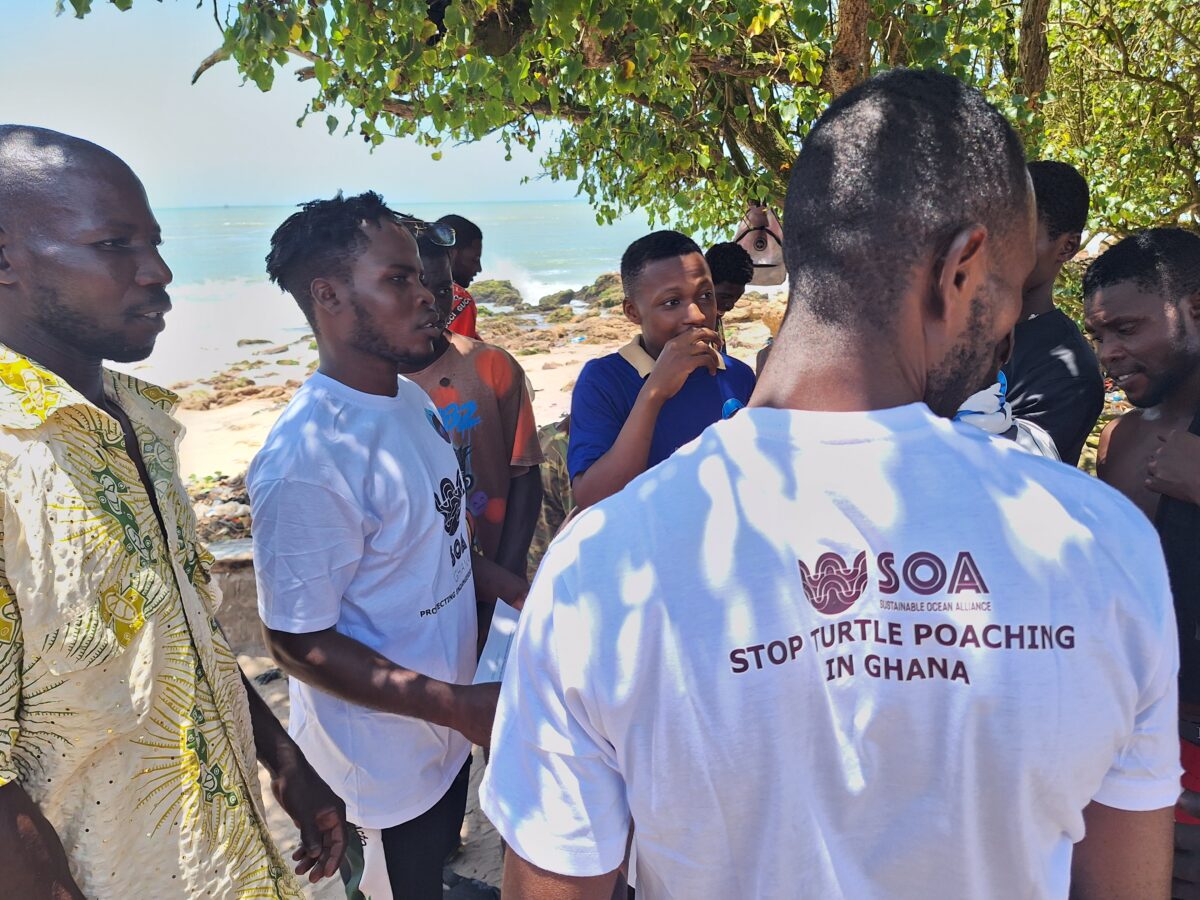
Sea turtles, essential guardians of marine ecosystems, are critically endangered due to human activities. In Ghana, despite legal frameworks such as the Wildlife Resources Management Act 115 of 2023 and international agreements, illegal poaching and trade persist. This report reviews existing policies and provides a detailed roadmap for policymakers to enhance sea turtle conservation, drawing from stakeholder engagement conducted by SOA Ghana in 2024 and journalistic insights from “The Vanishing Guardians of Ghana’s Oceans” by Gideon Sarpong.
1. Review of Existing Policies and Regulations
Key Legislation
- Wildlife Resources Management Act 115, 2023
- Classifies sea turtles as protected species under Schedule 1.
- Prohibits capture, possession, or sale of sea turtles and their derivatives.
- Imposes penalties for violations.
- International Commitments
- Convention on International Trade in Endangered Species (CITES): Regulates trade of endangered species.
- Convention on the Conservation of Migratory Species of Wild Animals (CMS): Protects migratory species like sea turtles.
- Local Enforcement Challenges
- Insufficient resources for Wildlife Division field offices.
- Lack of community involvement and awareness.
- Economic hardships driving illegal activities.
Current Gaps
1. Weak Enforcement of Laws
While the Wildlife Resources Management Act 115 and international agreements provide a strong legal foundation for protecting sea turtles, enforcement is often ineffective. Coastal communities such as Nyanyano continue to witness open poaching and trade of sea turtles. Factors contributing to weak enforcement include:
- Insufficient Funding: The Wildlife Division lacks the financial resources necessary to maintain surveillance and conduct operations in all poaching hotspots.
- Limited Personnel and Training: Field offices are often understaffed and ill-equipped to monitor extensive coastal regions effectively. Many officers lack training in modern conservation practices and enforcement tactics.
- Inconsistent Prosecution: Cases of poaching rarely result in convictions due to procedural delays, lack of evidence, or community resistance.
2. Insufficient Community Engagement and Awareness
Coastal communities often have limited understanding of the ecological importance of sea turtles. Many individuals, driven by economic necessity, view turtles solely as a source of income. Contributing factors include:
- Lack of Targeted Education Programs: Conservation education efforts are sporadic and fail to address specific misconceptions or cultural beliefs that perpetuate poaching.
- Minimal Local Involvement: Community members are rarely engaged in conservation initiatives, leading to a disconnect between policy objectives and local practices.
- Cultural Barriers: In some areas, traditional beliefs and practices either condone or ignore the exploitation of sea turtles.
3. Economic Pressures on Coastal Communities
Economic hardship is a major driver of illegal poaching. Fishers and traders often rely on sea turtles as an alternative income source, particularly during closed fishing seasons. Specific challenges include:
- Seasonal Income Instability: Fishing, the primary livelihood for many coastal residents, is highly seasonal and unreliable.
- Lack of Alternative Livelihoods: Few viable income alternatives are available in coastal communities, forcing individuals to engage in illegal activities.
- High Demand for Turtle Products: Local and regional markets for turtle meat, shells, and other derivatives provide financial incentives for poachers and traders.
4. Resource Constraints for Conservation Agencies
Agencies tasked with protecting sea turtles face numerous logistical and financial challenges. These include:
- Inadequate Equipment: Surveillance and monitoring efforts are hampered by outdated or insufficient equipment such as patrol boats, drones, and communication tools.
- Limited Data Collection: Poorly maintained databases and lack of research funding hinder the ability to track sea turtle populations and nesting patterns.
- Fragmented Efforts: Conservation initiatives are often uncoordinated, with limited collaboration between government agencies, NGOs, and local communities.
2. Policy Roadmap for Sea Turtle Conservation
Goal
To ensure the long-term survival of sea turtles in Ghana by addressing enforcement, education, community engagement, and sustainable livelihood support.
Recommendations
2.1 Strengthen Enforcement
- Increase Funding and Resources
- Allocate additional government funding to the Wildlife Division.
- Equip field offices with tools for surveillance and monitoring.
- Improve Interagency Coordination
- Collaborate with local law enforcement and coastal community leaders.
- Establish task forces targeting poaching hotspots like Nyanyano.
- Enhance Prosecution
- Fast-track cases involving sea turtle poaching and illegal trade.
- Publicize convictions to deter potential offenders.
2.2 Community Engagement
- Educate Coastal Communities
- Launch awareness campaigns highlighting the ecological role of sea turtles.
- Collaborate with schools, religious institutions, and traditional leaders.
- Promote Community-Led Conservation
- Support local groups like the Environmental Justice Foundation.
- Train and empower community members as “turtle guardians.”
2.3 Economic Alternatives
- Provide Sustainable Livelihoods
- Support fishers with alternative income sources (e.g., aquaculture, ecotourism).
- Offer microloans for small businesses in coastal areas.
- Develop Ecotourism Initiatives
- Establish protected nesting areas as tourist attractions.
- Train locals as tour guides and conservation educators.
2.4 Enhance Data Collection and Monitoring
- Expand Research
- Partner with academic institutions to monitor sea turtle populations.
- Use GPS tagging to study migration patterns and identify critical habitats.
- Set Up Reporting Mechanisms
- Introduce anonymous hotlines for reporting poaching activities.
- Reward informants to encourage community involvement.
3. Stakeholder Engagement Insights
Key Challenges Identified
- Economic Pressures: Fishers and traders resort to poaching due to financial struggles.
- Lack of Awareness: Communities unaware of the critical role of sea turtles.
- Weak Enforcement: Minimal action against known poachers and traders.
Policy Interventions
- Targeted Education: Conduct workshops in high-risk areas like Nyanyano.
- Collaborative Enforcement: Partner with community leaders and conservation groups.
- Economic Support Programs: Align conservation efforts with poverty alleviation strategies.
4. Conclusion and Call to Action
Sea turtles are indispensable to Ghana’s marine ecosystem, yet their survival is at risk due to human activities. By addressing enforcement gaps, empowering communities, and providing sustainable alternatives, Ghana can lead the way in marine conservation. Policymakers, conservationists, and local communities must collaborate urgently to turn the tide and protect these vanishing guardians of our oceans.
Appendices
Appendix A: Excerpts from Wildlife Resources Management Act 115, 2023
- Full protection for sea turtles under Schedule 1.
- Penalties for illegal capture or trade.
Appendix B: Stakeholder Engagement Summary
- Challenges faced by fishers and traders.
- Conservation success stories from other regions.
Appendix C: Proposed Budget for Conservation Efforts
- Community education programs: $200,000
- Field office resource enhancement: $500,000
- Livelihood support initiatives: $300,000
- Research and monitoring: $150,000
This budget should be subject to review every six months.
By adopting this roadmap, Ghana can secure a future where sea turtles thrive, ensuring the health of its marine ecosystems for generations to come.
This policy report was produced by SOA Ghana led by Gideon Sarpong, Founder SOA Ghana Hub
